
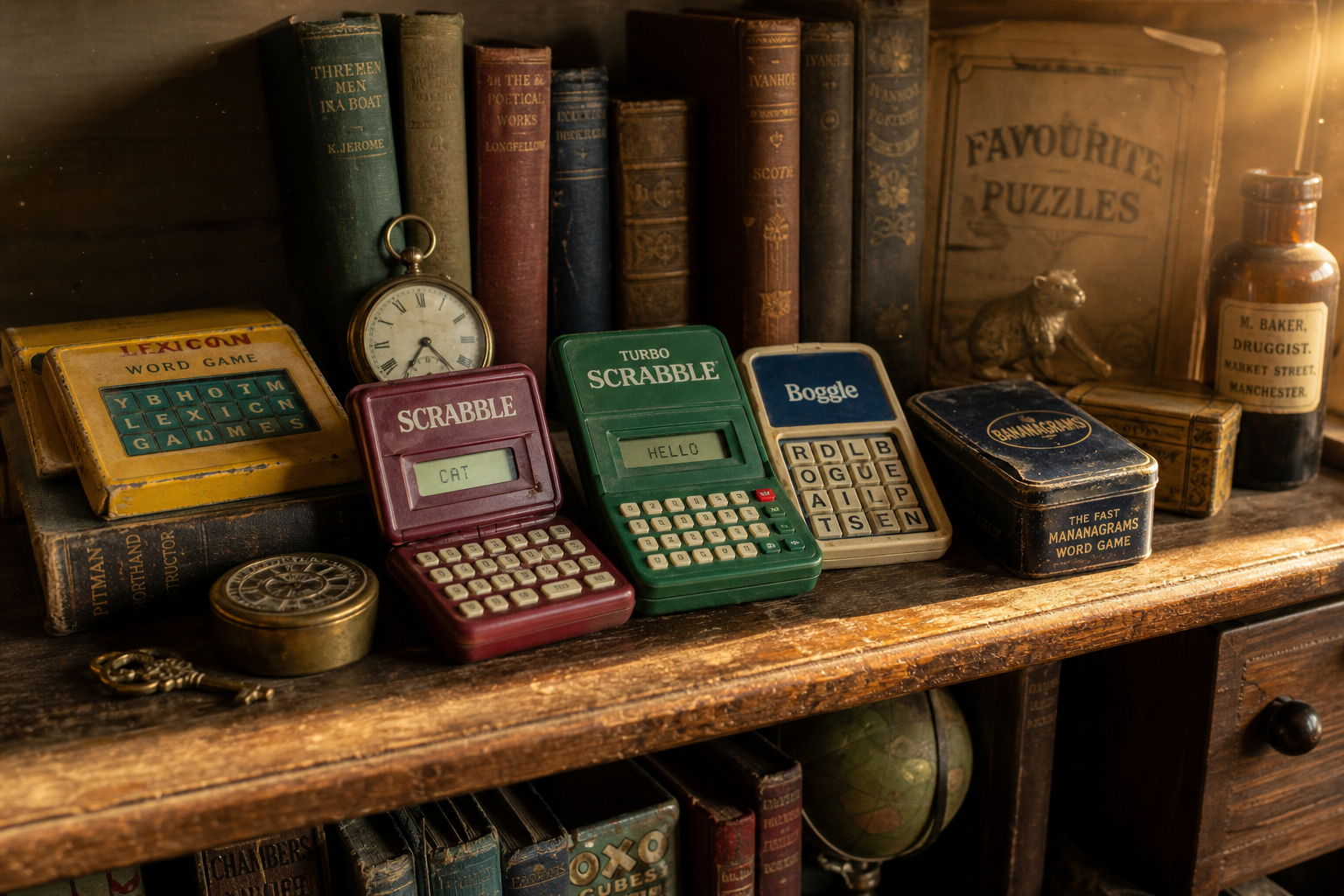
Vintage travel Scrabble collectors and travellers occasionally overlap: both love the click of tiny tiles and the absurdity of spelling long words on folds smaller than a paperback. The overlap breaks when cracked hinges meet turbulence — then nostalgia needs backup.
Online marketplaces still list Spears-branded pocket editions, export variants, and mystery lots labelled only “travel word game.” Photos rarely reveal hinge metal fatigue, so insist on close-ups of closures under neutral daylight, not yellow garage bulbs.
Understand what you crave
Pure collectors prioritise pristine boxes and correct era artwork. Active travellers need tile retention even if cardboard shows scuffs. Those goals conflict when sellers price mint packaging like museum pieces yet hide functional wear beneath foam inserts.
Write a short personal brief before bidding: must the set actually tour with you, or will it live on a shelf beside commuter memories? Honour that answer to avoid buyer regret.
Hinges and odours
Plastic travel shells from the late twentieth century sometimes suffer UV embrittlement — white stress marks near pivot pins foreshadow snaps. Cardboard hinges soaked in attic humidity smell musty and weaken fibre. Sniff descriptions matter because smoke residue refuses to leave printed grids politely.
If the listing admits “tobacco smell,” assume letters linger too unless you enjoy cleaning hundreds of tiny faces under magnification.
Tile mix integrity
Count tiles against the distribution chart for that SKU. Substitutions happen when kids borrow letters for other games or when car-boot sellers mix batches. A single incorrect duplicate might seem harmless until you realise two Z tiles sabotage fairness.
Blank tiles often vanish first. Ask whether blanks remain or if handwritten substitutes appear — charming for display, unacceptable for rules purists.
Fair UK pricing cues
Rarity is not always about age. Some 1980s pocket sets flood the market; others appear quarterly. Track sold listings instead of asking prices — delusional buy-it-now tags distort expectations. Add postage realistically: even light boxes inflate when insured.
Consider whether a modest best picks modern kit costs less than restoring vintage hinges once you value your hours.
Modern travel coexistence
Some collectors suitcase a worn player-grade set while wrapping mint copies in archival film. If that sounds excessive, you simply want a usable holiday companion — consider pairing a nostalgic purchase with spare magnetic travel bits from our magnetic boards guide so bumps do not erase your winning word.
Wooden deluxe cases may never match mid-century graphics emotionally but will survive coach air-conditioning without liberating mould spores.
Community diligence
Joining enthusiast forums helps decode obscure SKU codes — contributors often recognise printing quirks from grainy thumbnails. Still, verify claims yourself; collective memory occasionally romanticises mediocre hinges.
Before international imports, confirm that older plastic formulations meet your comfort level with vintage material standards. Many remain perfectly safe stored dry; others deserve display-only status after heat exposure.
After purchase, photograph tile maps and serial stamps while excitement runs high — documentation aids resale if your tastes shift before your next review-driven impulse purchase.
Cleaning tiles without regret
Never soak vintage plastic tiles in aggressive solvents — isopropyl on a cloth corner handles most grime; immersion swells micro-cracks. For paper-backed racks, keep liquids away entirely; brush dust with soft paintbrushes sized for miniature painters.
Odour remediation sometimes requires weeks of breathable storage with activated charcoal pouches, not rushed oven “dry outs” that warp inserts. Patience distinguishes collectors from people who simply relocate problems to landfill.
Display versus suitcase life
Shelf queens deserve UV-filtering glass if sunlight strikes regularly; ink fades faster than celluloid yellows. Rotating boxed orientation quarterly prevents uneven spine compression on cardboard editions.
If you alternate display months with travel months, log tile counts after each journey so missing pieces do not become archaeological mysteries next spring cleaning.
Community swaps and ethics
Trading duplicate vowels at collector meets keeps games alive; always mark homemade replacements visibly so future sellers do not misrepresent franken-sets as factory-perfect. Transparency maintains trust that sustains niche hobbies when speculators circle.
Vintage travel sets reward patient hunters. Treat every hinge photo as a contract, every missing tile as a negotiation lever, and every nostalgic rush as optional seasoning rather than the main meal.
Photograph UV-exposed boxes under identical lighting each spring; gradual yellowing validates seller claims about storage conditions better than memory alone when you decide whether to rehouse boards away from sunny bay windows.
Joining local tabletop swap afternoons sometimes surfaces fair trades you cannot list online because shipping brittle hinges feels criminal. Bring microfibre cloths and patience — enthusiasm spreads faster than price guides.
Museum conservators can stabilise cracked celluloid tiles, yet fees outstrip casual budgets; weigh sentimental value before commissioning professional help, especially when a working modern travel set lurks a click away for rainy campsite duplicates.
Catalogue subtle mould numbers inside lids; factory codes help forum experts date ambiguous listings and stop you from overpaying for a common run described as “ultra rare” by excitable sellers.
When relatives inherit mixed lots, spend an afternoon sorting by serif shapes on letterforms — manufacturing eras differ — before you trade spares and accidentally reunite tiles that belong to unrelated sets.
Lucy Harcourt reluctantly sold a mint 1990s pocket box to prove she could practise what she preaches about luggage honesty.