

What “travel Scrabble” really means.
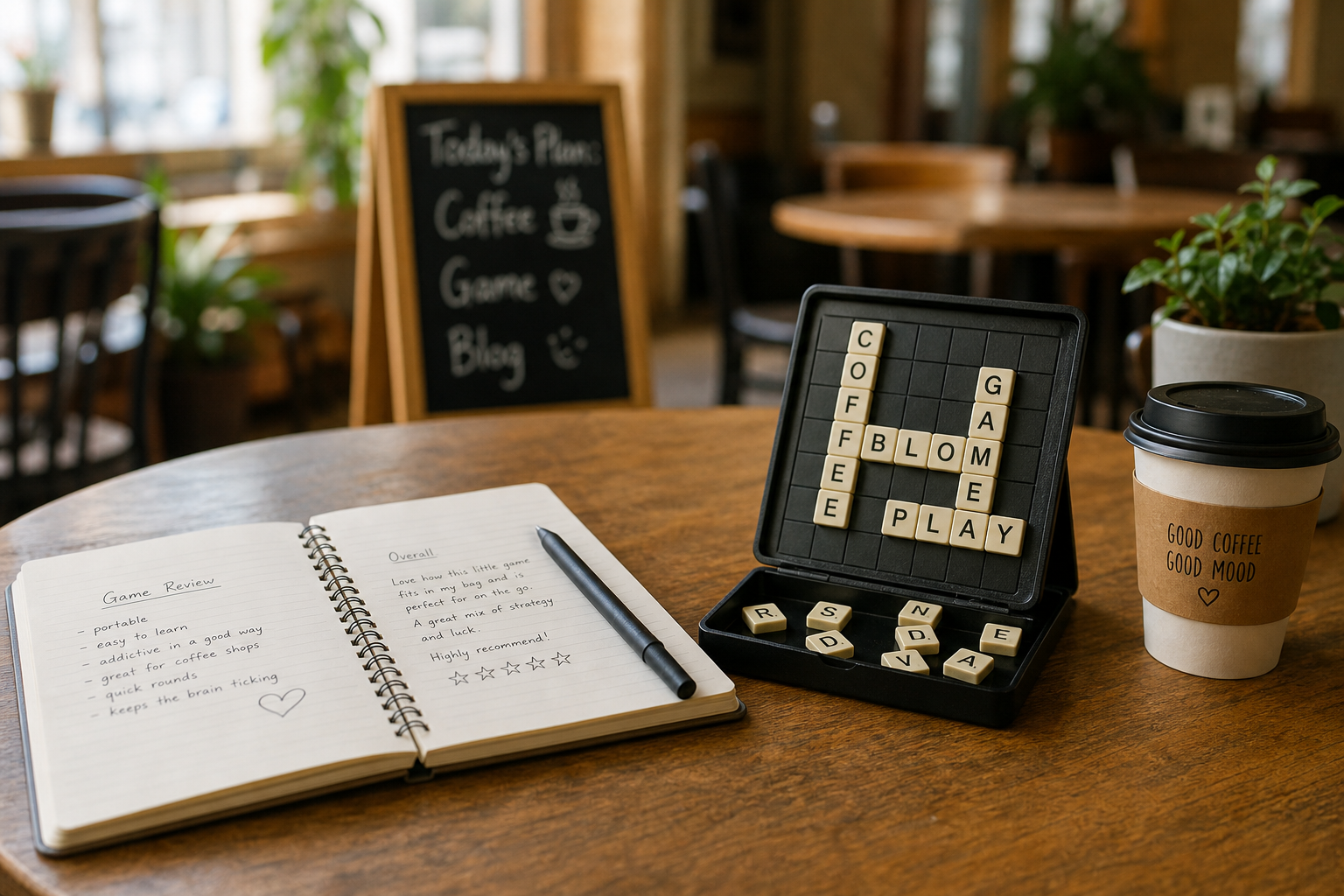
When regular players say travel Scrabble, they usually picture a compact box that still respects turn order, double-word scores, and the quiet ceremony of drawing fresh tiles. Licensed travel sets honour those rules but strip away the acreage: the grid shrinks, the plastic becomes thinner, and the game politely asks you to adapt your fingering style.
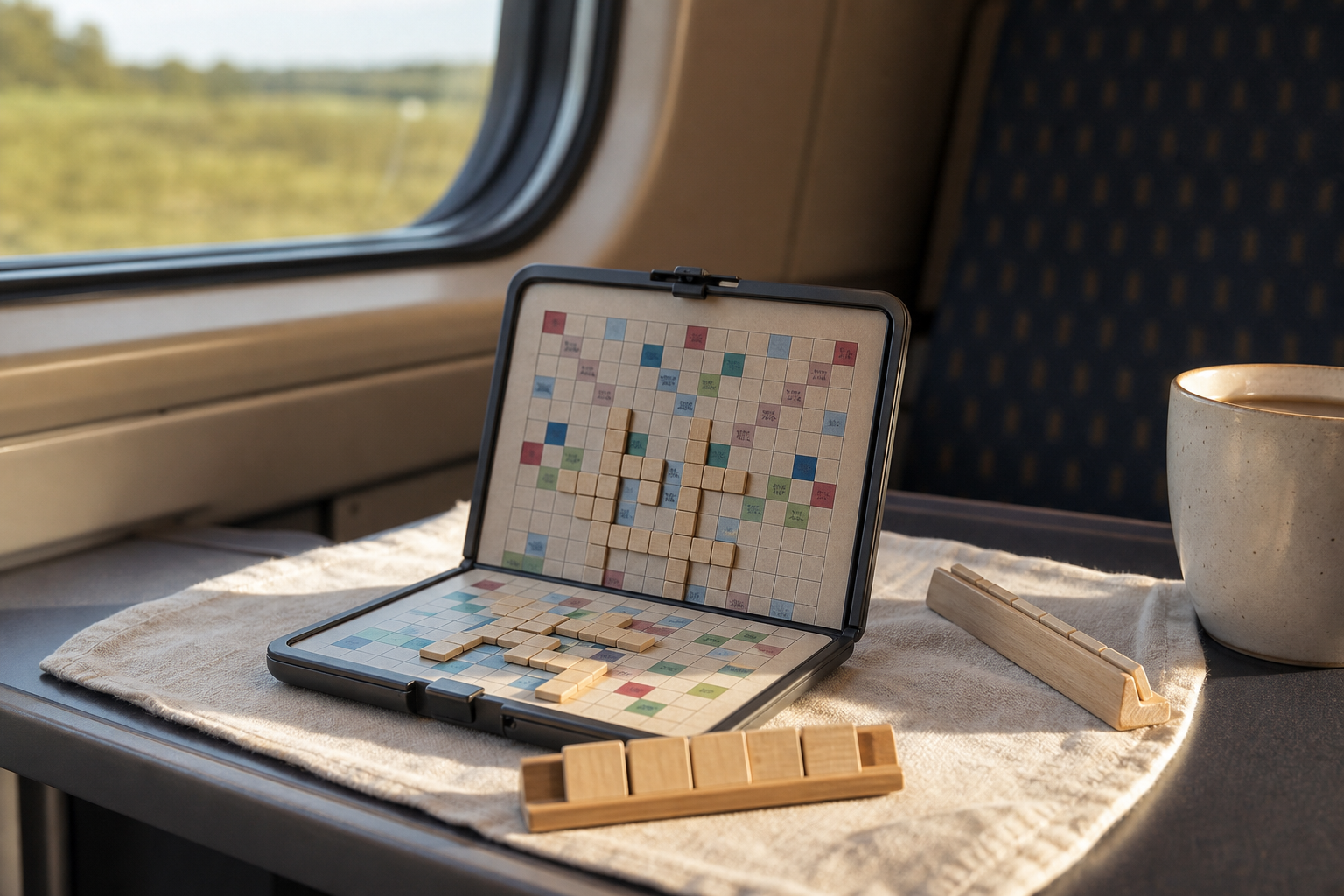
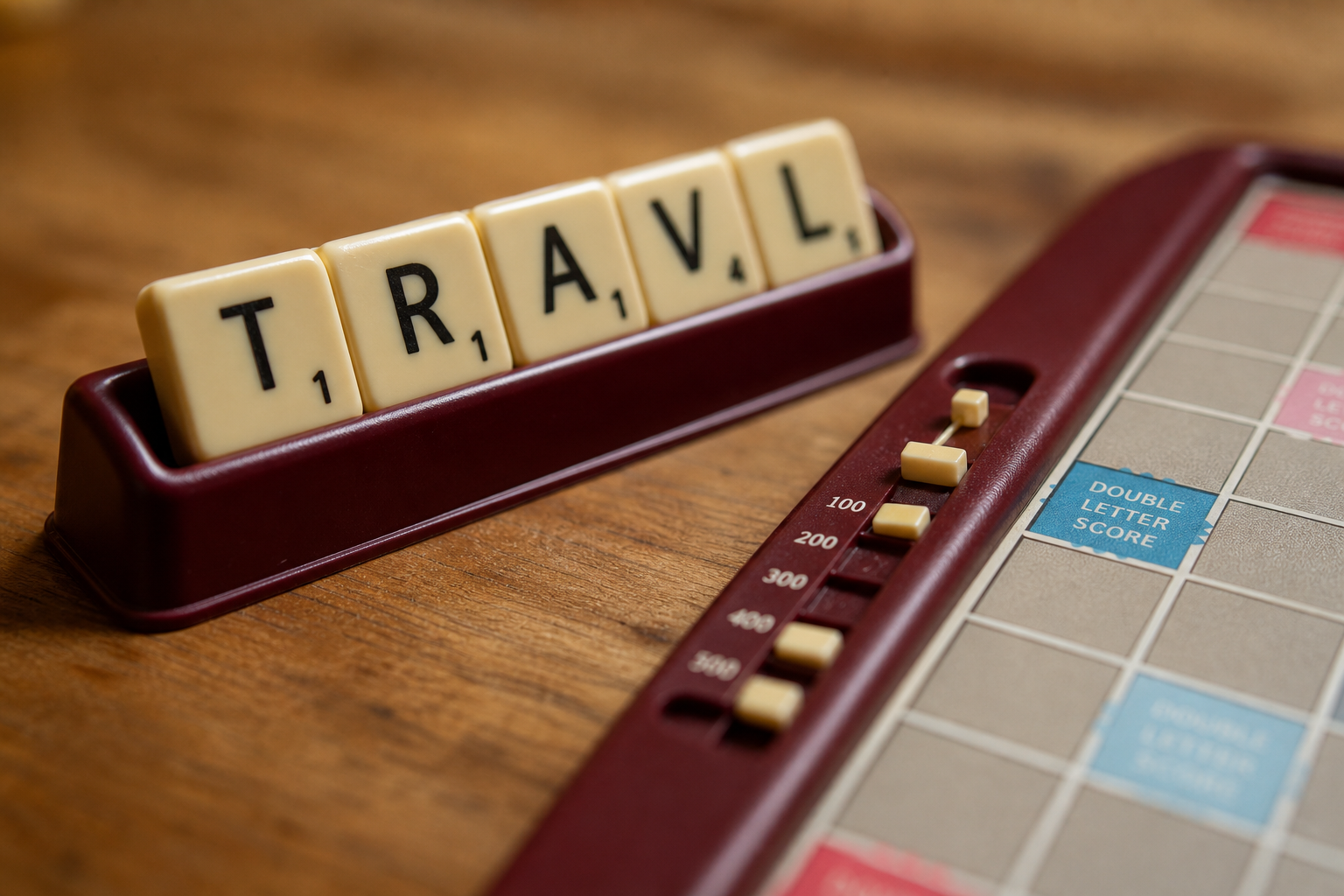
From a design standpoint, every millimetre matters. Boards gain ridges or magnet arrays so letters stay put during turbulence. Racks angle slightly inward, which reduces glare off glossy tiles when you sit beside a carriage window on a bright coastal route. Some editions integrate scoring tracks right into the rails, removing the need for scrap paper blowing across a picnic bench.
Planes, trains, camper vans
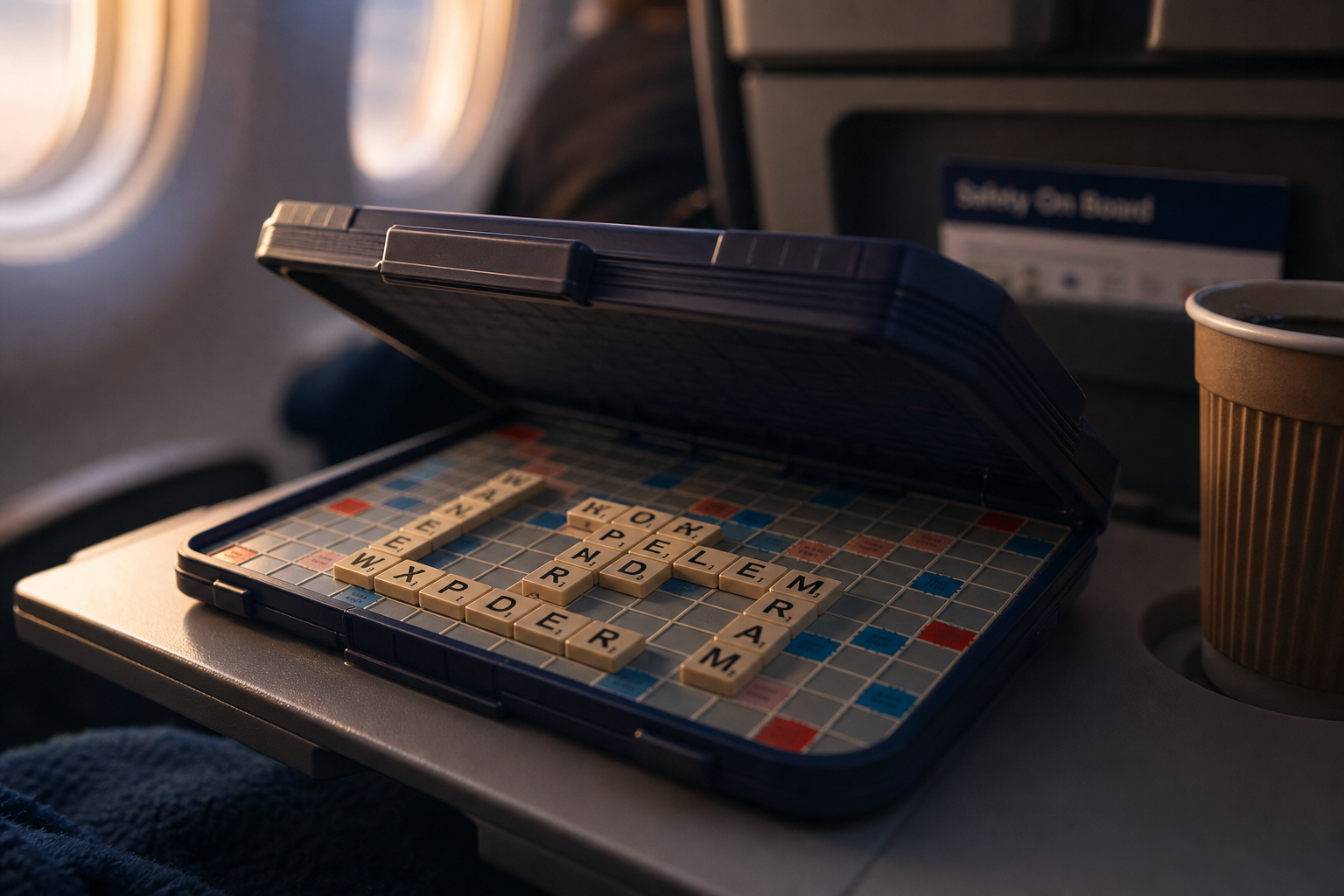
Airline cabins reward magnetic kits because cabin vibrations never really stop. Trains introduce rhythmic sway — less violent than potholes but enough to slide unsecured plastic. In camper vans you get both: vibration plus the occasional hill start. The families we hear from often pack two solutions: a rugged magnetic board for driving days and a lighter zip-case set for walking excursions from the site.
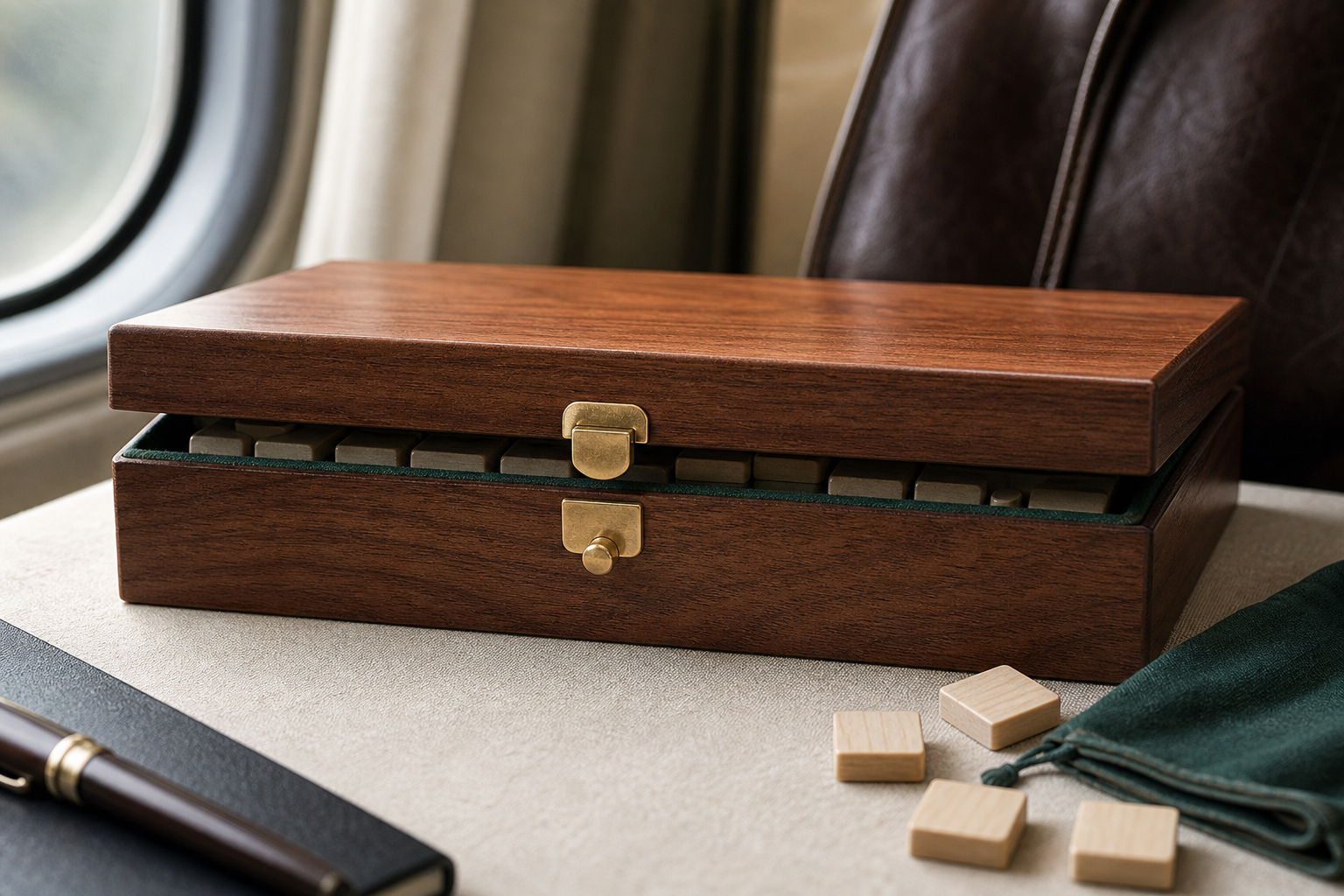
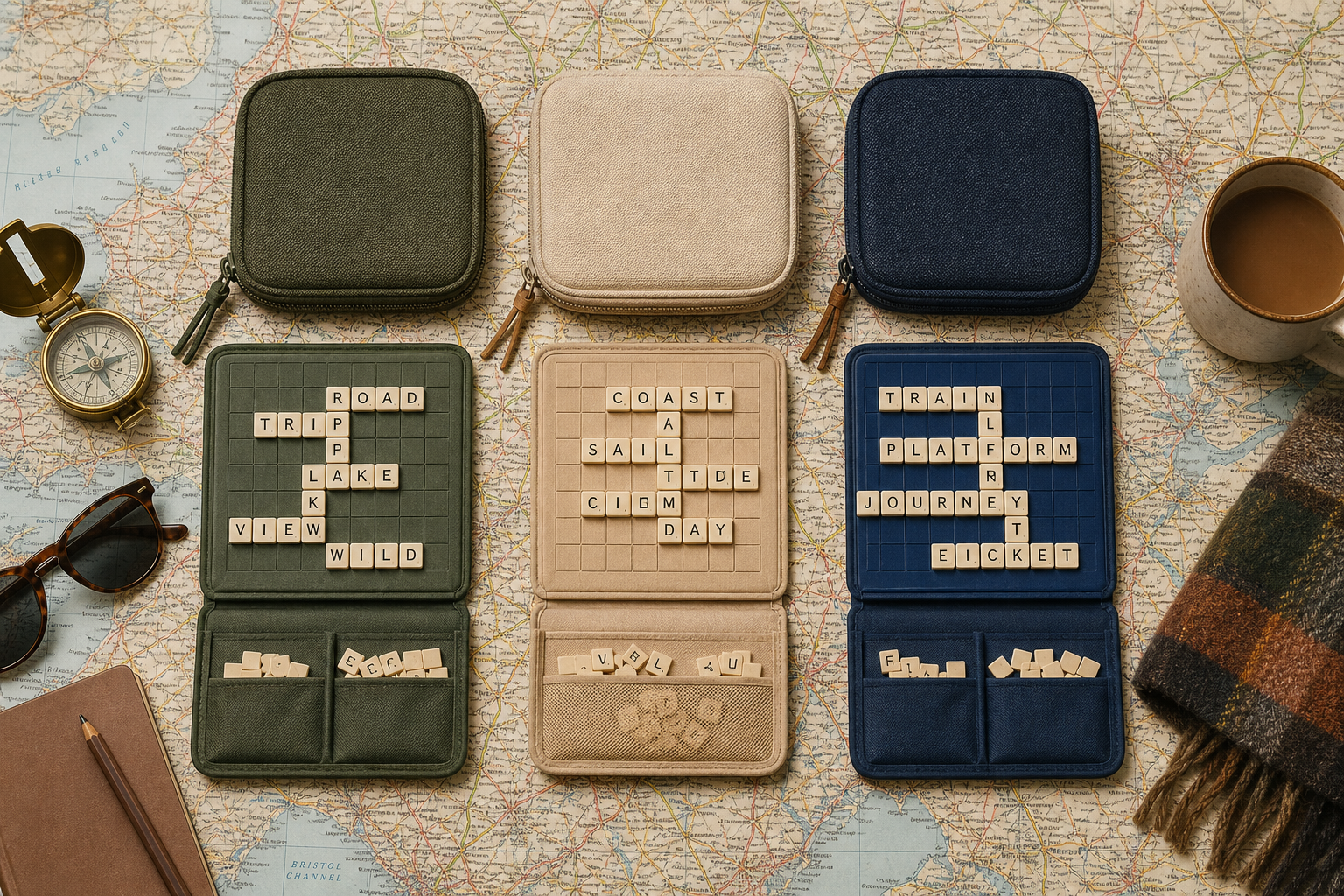
British commuters sometimes prefer cloth zip cases because they slip beside a laptop without shouting “board game” in a busy open-plan carriage. Others want the satisfying snap of a wooden deluxe shell that doubles as coffee-table decor when you reach the holiday let. Neither choice is wrong if it matches how you actually travel.
Clip-in grids versus magnets
Clip-in or push-in tile systems mechanically lock letters into the grid. They click crisply and resist mild bumps, even without magnets, but inserting each tile takes slightly longer. Magnetic surfaces offer faster rearranging when you are mentally juggling prefixes like re- or un-, but a weak magnetic layer lets letters skate if you lift the board suddenly.
Our magnetic boards guide breaks down how to test hold strength without damaging the set, while the best picks page lists scenarios where snaps beat magnets — especially when toddlers insist on “helping” rearrange the grid.
Retail lines worth knowing
Mattel’s long-running travel editions often appear in UK toy aisles with a plastic folding case and clip-forward engineering aimed at mainstream families. Winning Moves occasionally refreshes “to go” concepts with zippered cases that feel closer to a sturdy pencil roll than a rigid suitcase. Premium buyers gravitate toward deluxe wood editions with magnetic closures — heavier to pack, but soothing to unbox after a long drive.
Trademark names shift with distributor agreements, so we describe behaviours instead of promising a specific box photo. Always read the seller’s measurement table: a true travel set lists tile height, folded dimensions, and whether racks detach. If a listing hides those numbers, treat it as a red flag.
Tiny tiles, big habits
Expect travel tiles near 1.2 cm — roughly half an inch — which is ideal for compact grids yet fiddly for large hands or low light. Carry a small torch if you play in sleeper berths, and consider a dark tray cloth to keep ivory-coloured tiles visible against pale table surfaces.
Lost tiles are the quiet tax on portable play. Replace spare vowels early in the trip because nothing derails a friendly match faster than a missing E. Many seasoned travellers laminate a tiny list of “substitute tiles” for house rules, but purists should pack a second travel set for emergencies rather than scribbling on paper mid-game.
Apps versus physical sets
Digital word games remain the ultimate zero-bulk option when you only have a phone and a charging cable. What tactile travel kits still offer is shared eye contact, fewer notifications, and the ability to coach children through anagram thinking without another screen battle. Our reviews section compares the emotional feedback readers give to apps versus compact boards, especially on long-haul nights when cabin lights dim.
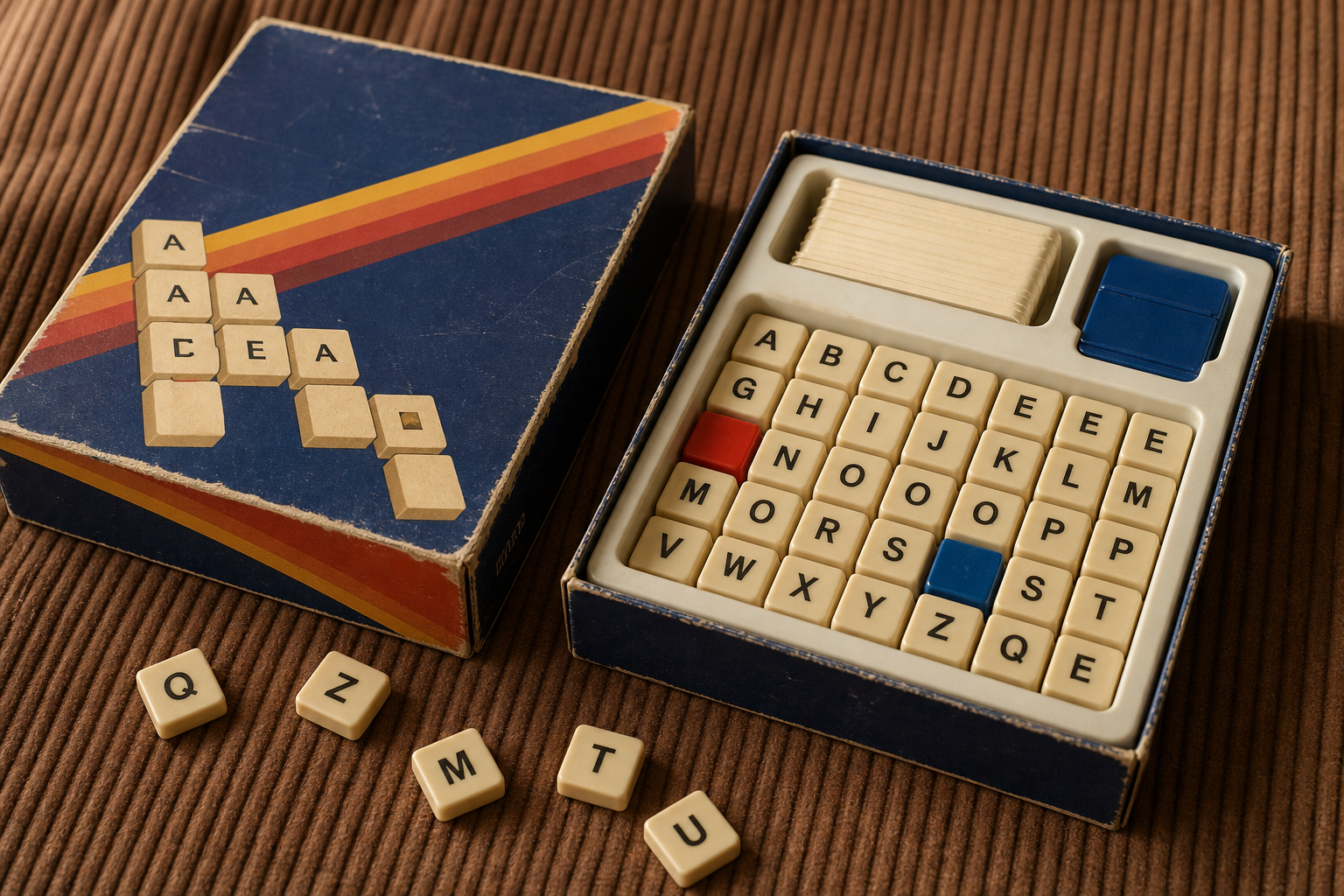
If you want heritage charm, our vintage pocket editions article surveys Spears-era packaging, hinge wear, and fair pricing on secondary markets. For cabin-grade polish, the deluxe travel cases page explains when wood upgrades justify the weight penalty.
Transparency: Travel Scrabble is an independent editorial project. We may summarise publicly listed product traits, but retailers change moulds seasonally — verify the latest specs before you buy.